When Fleet Funding Becomes Risk Management
Across local government, fleet decisions are being shaped by pressures that extend beyond simple replacement cycles. Regulatory change is coming more often and financial pressure is building across multiple service areas at once. Procurement, compliance and delivery are no longer separate conversations but part of the same operating reality.
This is changing how councils think about fleet funding and the level of risk they are willing to hold in their models. Capital and operational approaches are no longer just different payment structures; they reflect different ways of dealing with uncertainty and keeping services running smoothly.
A steady increase in regulatory pressure across local services
Regulation is no longer arriving in distinct phases. It is building steadily across waste, emissions and procurement, creating a constant layer of change that councils have to absorb while continuing day-to-day delivery.
Recent changes such as extended producer responsibility for packaging and the rollout of Simpler Recycling are increasing both the volume and frequency of requirements placed on local authorities. At the same time, funding linked to environmental performance is evolving, introducing new layers of reporting and accountability.
Taken together, this means councils are no longer responding to individual policy changes. They are operating in a continuous state of adjustment while services still need to run without disruption.
Funding is becoming more exposed to system-wide change
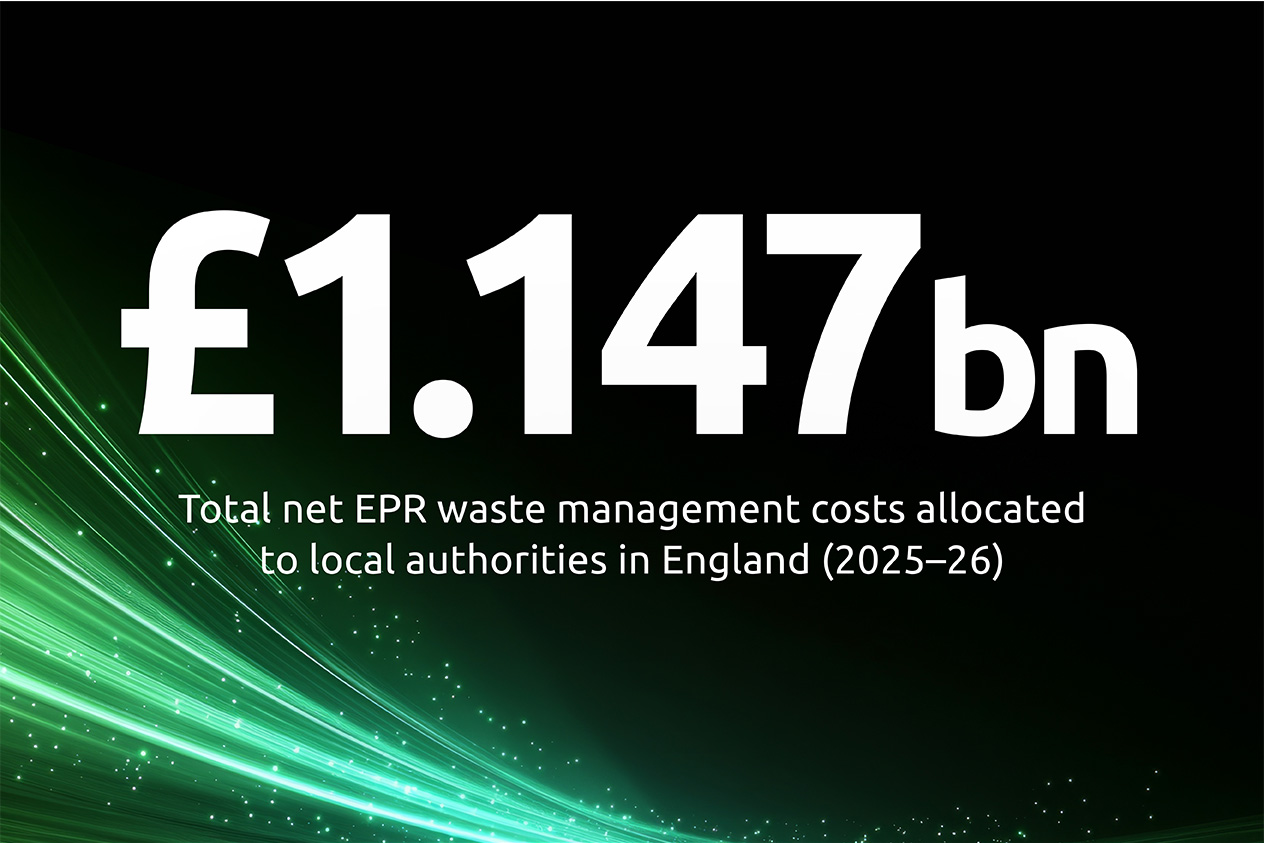
Funding in local government is increasingly shaped by national policy decisions that shift costs across the system rather than containing them within individual services. Extended Producer Responsibility is a clear example, where financial responsibility is based on measured activity and compliance requirements.
For councils this changes how budgets behave in practice. They are no longer fixed envelopes that can be managed in isolation. They are influenced by external variables that move with policy design, reporting obligations and system performance.
For procurement and finance teams this creates a more exposed decision environment. Cost certainty is harder to maintain and funding variation now sits directly alongside operational decision making. Fleet choices are increasingly made within that combined pressure.
Why lifecycle costs are becoming less predictable
Procurement decisions are increasingly being made without stable assumptions about long term cost. Asset performance, maintenance needs and operational demand shift over time rather than staying consistent across a contract lifecycle.
What is agreed at the point of procurement is therefore less likely to match what is experienced in delivery. Changes in utilisation, compliance requirements and service intensity all affect total cost in ways that are harder to predict upfront.
Cost, therefore, is no longer a fixed input. It moves in response to how services are actually used and the conditions they are operating in.
Volatility is absorbed at operational level
Once pressure reaches local government, it is absorbed through delivery rather than removed from it. Services still have to run, so adjustments happen inside the system rather than through structural change.
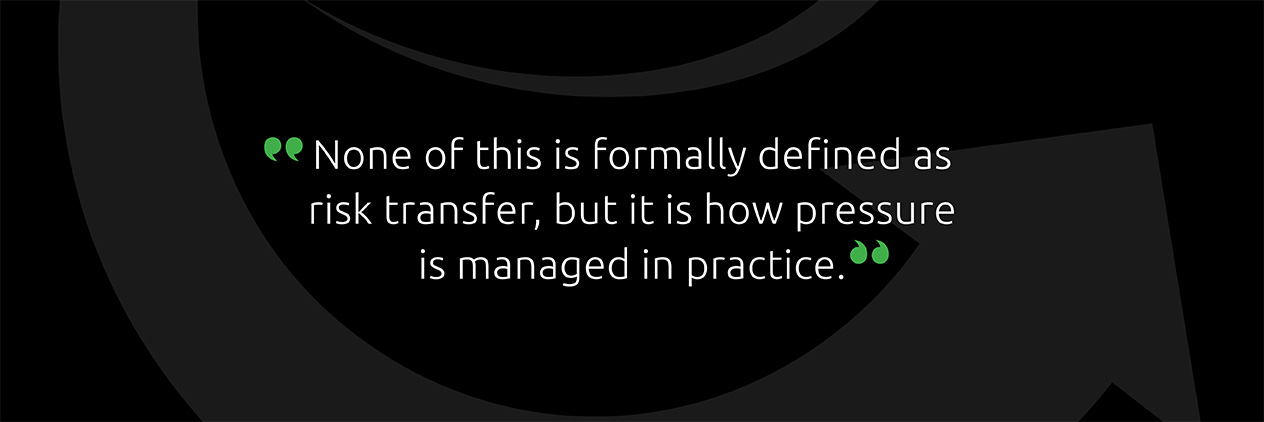
In practice this means capacity gets stretched, vehicles are used harder and maintenance is shaped around availability rather than ideal cycles. None of this is formally defined as risk transfer but it is how pressure is managed on the ground.
Over time, this concentrates strain within operational teams who are constantly balancing service continuity against reduced flexibility in the system.
Fleet funding is becoming a question of risk allocation
When councils are under sustained pressure, fleet funding stops being about how assets are purchased and becomes about where risk sits when conditions change. It defines how uncertainty is distributed across the system.
Capital approaches tend to place more of that exposure at the point of procurement, where assumptions about usage and performance are set upfront. Operational approaches spread exposure across delivery, where cost and performance adjust as conditions change.
The important point is not which model is more efficient. It is how each behaves when conditions are no longer stable. Under ongoing pressure, fleet funding becomes a way of deciding where uncertainty sits and how it is managed over time.
At that point it is no longer just a procurement decision; it is a decision about how resilience is structured across service delivery.
What this means for fleet strategy
Across regulation, funding and delivery, a consistent pattern is emerging. Fleet decisions are increasingly being made in environments where assumptions do not hold for long. Costs move, expectations shift and operational conditions rarely remain stable for the duration of a contract.
As Neil Jeremiah, Managing Director at Endurance, explains:
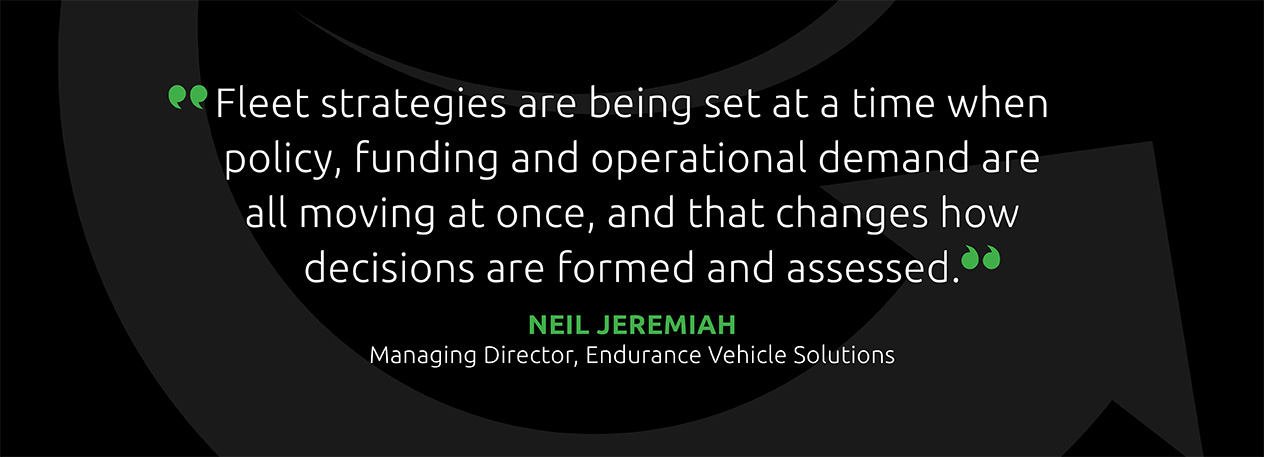
“What is changing is not just the complexity of individual decisions, but the context those decisions sit within. Fleet strategies are being set at a time when policy, funding and operational demand are all moving at once, and that changes how decisions are formed and assessed.”
In that environment, fleet decisions are no longer defined by procurement or funding structure alone. They are defined by how uncertainty is managed over time and where responsibility sits when conditions shift.
That is where the structure behind fleet provision becomes critical. Models that fix cost and performance at the point of purchase behave differently under pressure than models that allow for ongoing adjustment.
This is where Equipment-as-a-Service (EaaS) sits within the wider structural shift. It allows provision, maintenance and accountability to operate across the lifecycle rather than being fixed at the point of purchase.
It is not a change in what fleets need. It is a change in what it takes for them to keep working.
Our mission is to enable yours. Keep your fleet moving with our specialist vehicle services.
Follow Endurance on Linkedin for the latest news, company updates and events