The Strategic Fleet Partner: Redefining Accountability in Public-Sector Operations
“Fleet used to be viewed as a procurement exercise: specify the vehicle, run the tender, and manage the contract. But today, councils are relying on those assets to protect frontline service delivery every single day.” – Neil Jeremiah, Managing Director
Public-sector fleet procurement has traditionally focused on specification, capital cost and delivery timelines. But the operating environment has changed. Service visibility is higher, budgets are tighter and operational disruption is scrutinised more closely than ever.
As a result, fleet providers are no longer simply asset suppliers. Increasingly, they are operational partners whose decisions and support models influence essential service continuity on the ground.
In this article, we examine how expectations around fleet provision are changing, and what councils should now expect from modern fleet partners.
1. Vehicle Quality as a Non-Negotiable
No amount of contract structure or operational support can compensate for vehicles that are unreliable, poorly maintained or nearing the end of their working life. For local authorities delivering critical frontline services, vehicle quality is therefore an essential starting point. Waste collection vehicles, highway maintenance fleets and environmental service vehicles operate under demanding conditions and require robust engineering, specialist specification and rigorous maintenance to remain dependable.
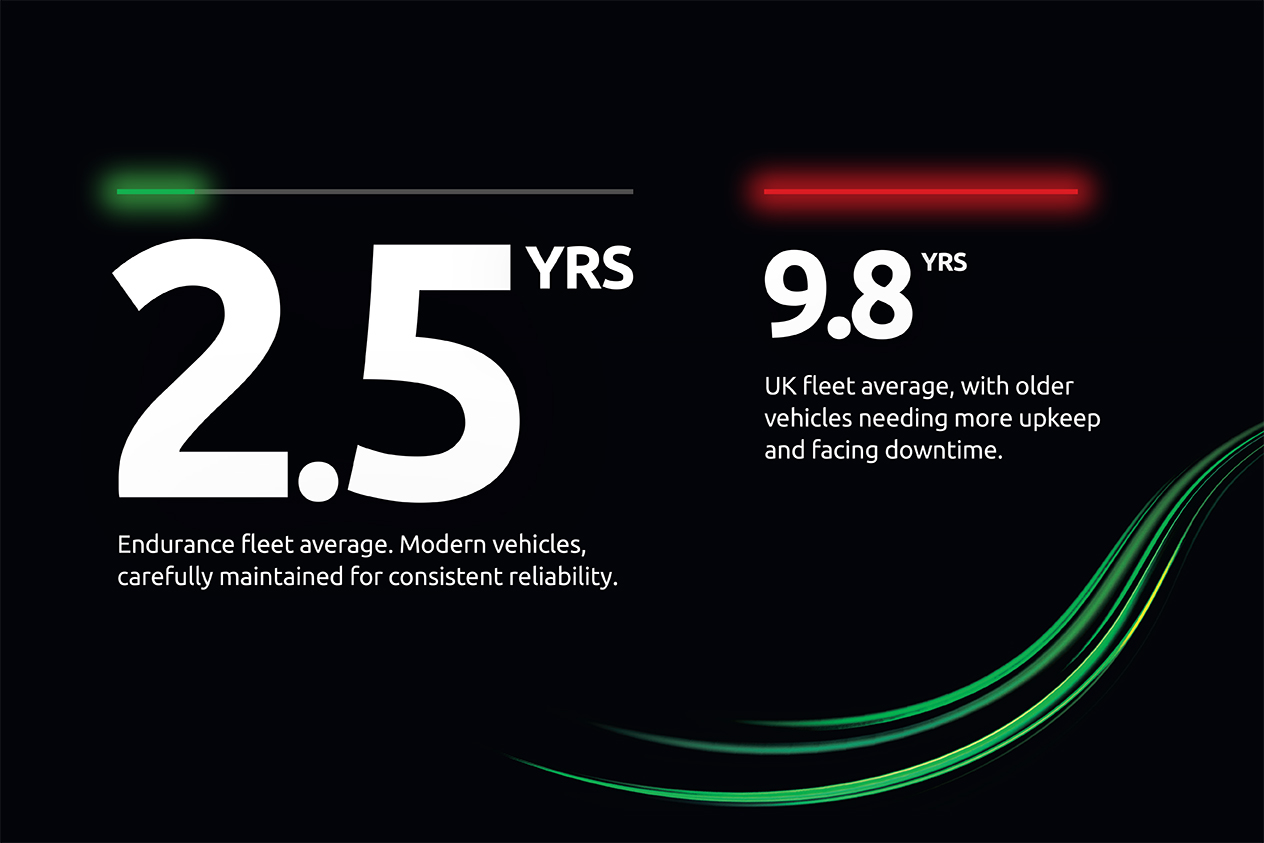
Fleet age is one factor shaping this challenge. The average age of UK medium and heavy commercial vehicle fleets now sits at 9.8 years, and older assets inevitably require more maintenance and experience greater downtime. At Endurance, our fleet averages 2.5 years, reflecting a deliberate strategy of investing in modern vehicles from leading manufacturers and maintaining them to the highest operational standards.
That investment provides the foundation councils need to deliver reliable frontline services.
2. Why Uptime, Resilience and Continuity Now Define Performance
But asset quality alone is not enough. What really matters to councils is whether services can continue to run despite inevitable operational challenges. When vehicles are unavailable, the consequences are immediate: missed rounds, redeployed staff and rising recovery costs. In highly visible services such as waste collection, disruption can quickly lead to resident complaints, media attention and political scrutiny.
The scale of the issue is significant. In 2024 alone, an estimated 2.5 million bin collections were missed across the UK, highlighting the growing pressure on local authority services. As Neil Jeremiah explains: “Fleet performance isn’t just about the vehicles, it’s about whether the service continues to run when the pressure is on.”
That is why Endurance’s model extends beyond supplying vehicles, combining proactive maintenance, lifecycle management and flexible fleet support to help protect service continuity.
For local authorities, this continuity of service is not simply desirable: it is essential.
3. EaaS as a Structural Solution, Not a Commercial Gimmick
As operational expectations rise, the structure behind fleet provision is coming under greater scrutiny. Equipment as a Service (EaaS) models are increasingly discussed as a way of aligning fleet supply with long-term service performance.
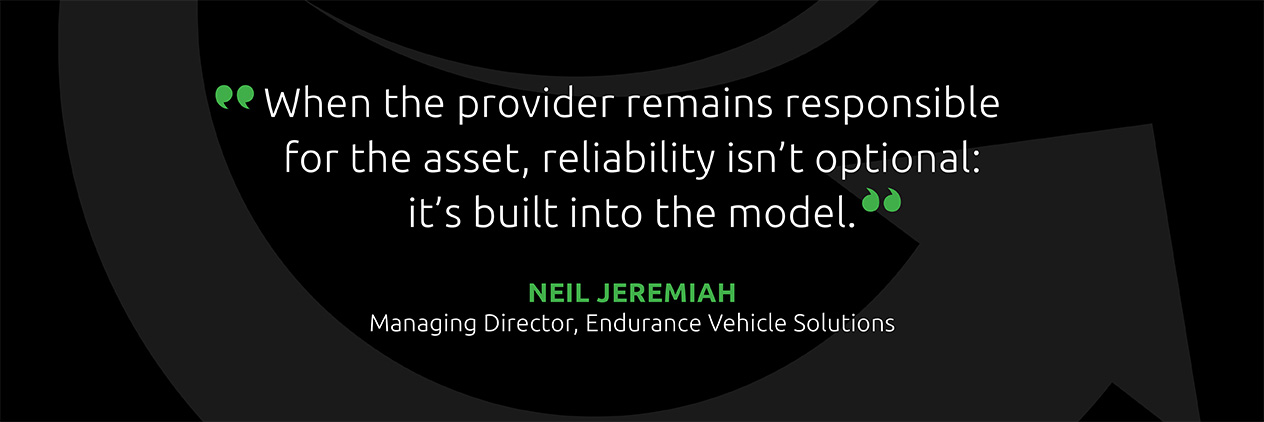
While the terminology may be relatively new in the sector, the principle is not. At Endurance, we have long believed responsibility for fleet performance should extend well beyond the point of supply. Under an EaaS-style model, providers retain responsibility for the asset throughout its lifecycle, aligning their incentives with uptime, maintenance quality and operational continuity. “When the provider remains responsible for the asset, reliability isn’t optional,” notes Neil. “It’s built into the model.”
For councils managing critical services, the real value lies not in the label, but in the accountability the structure creates.
4. What Councils Should Expect from Modern Fleet Partners
Strong fleet partnerships are not built on contracts alone. They depend on people who understand the operational realities councils face every day. At Endurance, our service is delivered by experienced specialists who know their customers’ operations and can respond quickly when challenges arise. Not through distant call centres disconnected from frontline service realities.
That commitment to close operational support is reflected in the feedback we receive from our clients, who awarded Endurance an exceptional Net Promoter Score of +92 earlier this year. We believe this reflects a service model that is helping set the benchmark for customer support in our sector. It’s something the whole team takes real pride in.
Ultimately, great fleet support combines dependable vehicles with the people and systems that keep frontline services moving.

Conclusion
Expectations around public-sector fleet operations have fundamentally changed. Reliability, accountability and service continuity now matter just as much as specification or procurement cost.
If accountability is becoming a defining requirement in your next fleet cycle, it may be time to reassess not just the vehicles, but the structure behind them.
See how Endurance helps councils deliver reliable services with our specialist vehicle services.
Follow Endurance on Linkedin for the latest news, company updates and events