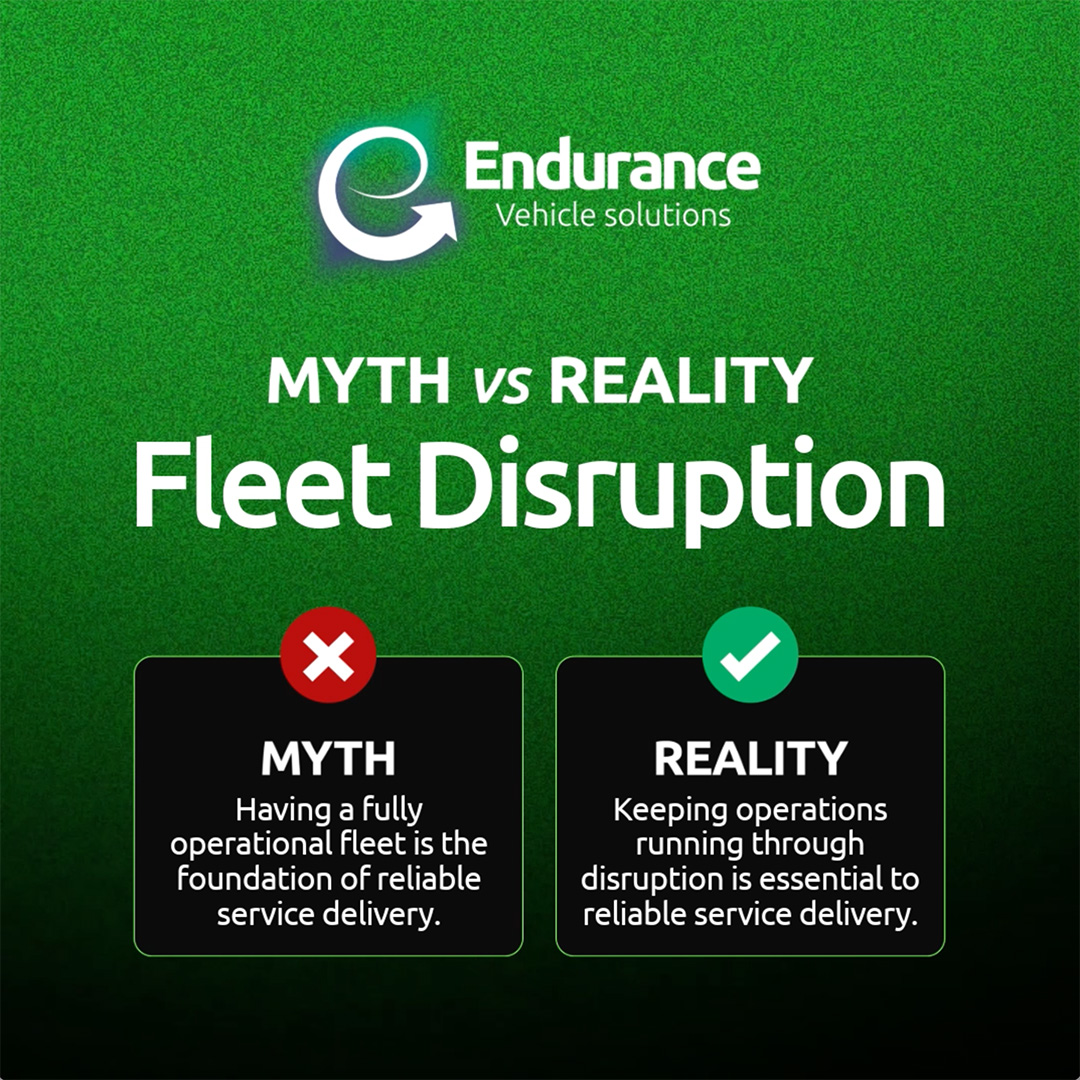
Myth vs. Reality: Fleet Disruption
Myth: The priority is getting the vehicle back on the road.
Reality: The priority is keeping the service running.
When a vehicle goes off the road, the immediate problem appears to be a maintenance one. A fault needs diagnosing, a repair needs completing and the vehicle needs returning to service. But while the maintenance team is solving the fault, the operational team is solving a different problem: how the service keeps running without the vehicle.
James Mulligan, Operations Director at Endurance, shares his perspective:
“We tend to define downtime by the period when a vehicle is unavailable. From an operational perspective, that can be too narrow. A vehicle may be back in service, but the operation can still be dealing with the consequences of the decisions made while it was off road.
“When responsibility for maintenance, replacement and operational support is divided across different teams, no single party necessarily has responsibility for the wider operational impact. The response needs to coordinate those decisions quickly, without requiring the service to reorganise around the disruption.
“Accountability in fleet operations therefore needs to extend beyond responsibility for the asset. That means having the authority to act, access to the necessary support and a clear understanding of what happens next. For me, that is the difference between managing downtime and managing the impact of downtime.”
At Endurance, we work alongside councils throughout the life of their fleet, helping them adapt to changing requirements, maintain fleet availability and protect service continuity while managing the maintenance, servicing, repairs and replacement provision that sits behind it.
👉 If you’re reviewing how your fleet manages downtime, we’d be happy to talk through what a different approach could look like..
High specification used vehicles you can trust, browse our sales fleet
Follow Endurance on Linkedin for the latest news, company updates and events